


2026 Nissan Rogue vs. Subaru Forester: Which Compact SUV Wins?
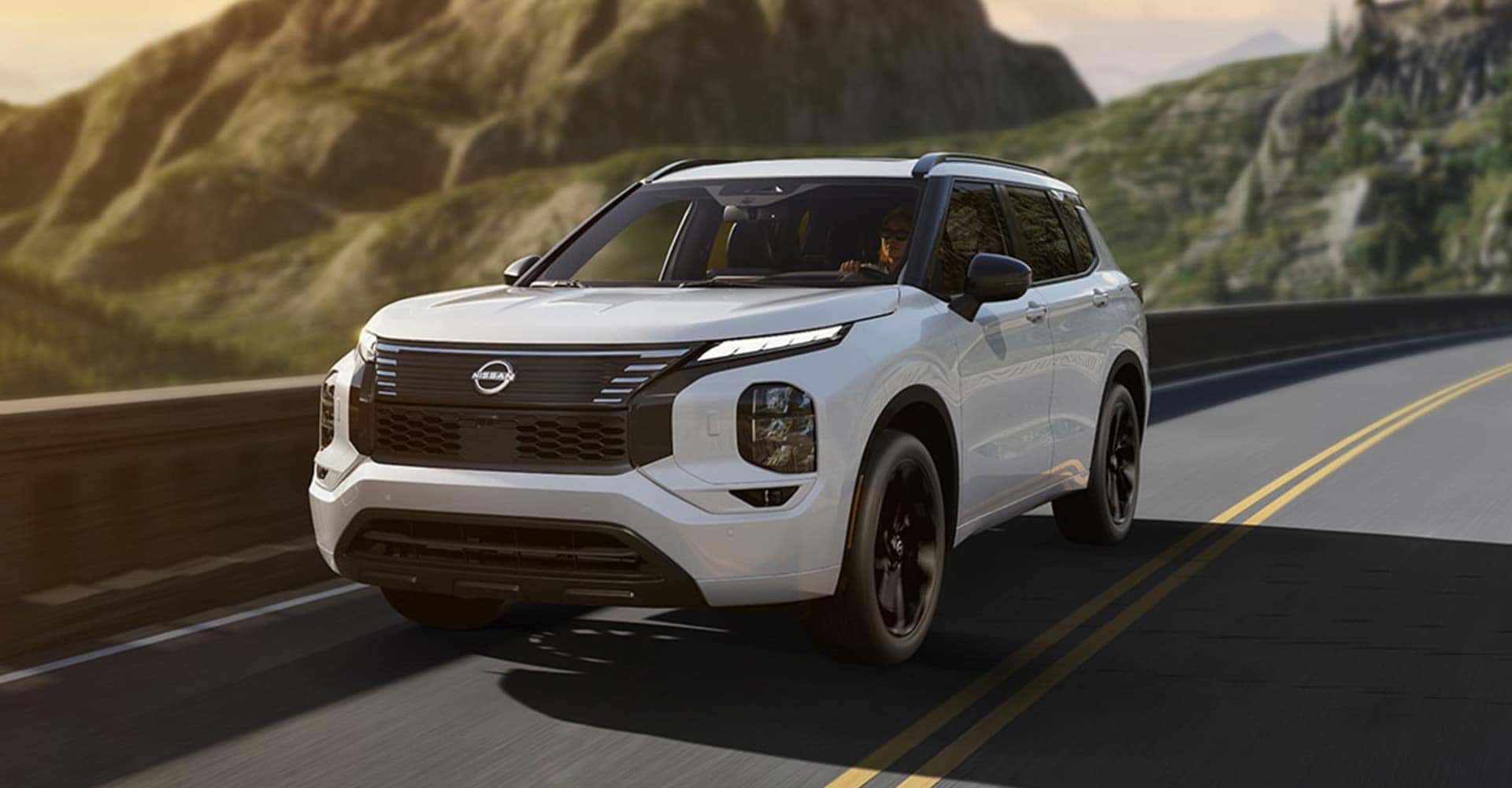
The 2026 Nissan Rogue vs. Subaru Forester is one of the most common cross-shop decisions in the compact SUV segment, and for good reason. Both vehicles hit similar price points, offer all-wheel drive capability, and come equipped with active safety technology across the lineup. But when you line up the numbers that matter most to everyday drivers, the 2026 Rogue pulls ahead in the categories that count: engine output, cargo capacity, highway fuel economy, and cabin technology. Here is the complete comparison.
Ready to see the 2026 Nissan Rogue in stock at Suntrup Nissan?
Performance: The Rogue’s Turbocharged Engine Wins on Power and Response
The Rogue’s turbocharged 1.5L VC-Turbo engine delivers 201 horsepower and 225 lb-ft of torque at 2,800 RPM. The Forester’s naturally aspirated 2.5L flat-four produces 180 horsepower and 178 lb-ft of torque, with peak torque arriving at 3,700 RPM. That means the Rogue delivers 21 more horsepower and 47 more lb-ft of torque, and it delivers that torque nearly 1,000 RPM earlier. For drivers, the difference is immediate throttle response from a standstill, stronger acceleration on highway on-ramps, and a more confident passing experience without working the engine hard.
The Forester’s naturally aspirated engine has a well-established reputation for mechanical simplicity, which is worth noting for buyers who weigh long-term ownership costs. But for drivers logging regular miles on I-55, I-270, and I-44 through the St. Louis metro, the Rogue’s turbocharged advantage is felt every commute.
Features and Trim Value: More Technology at the Entry Level
The Rogue matches the Forester on standard active safety technology and pulls ahead in cabin connectivity at comparable trims. The 2026 Rogue S, starting at $29,490 with front-wheel drive, includes Safety Shield 360 as standard equipment: Automatic Emergency Braking with Pedestrian Detection, Lane Departure Warning, Blind Spot Warning, and Rear Cross Traffic Alert. The SV trim at $30,490 adds ProPILOT Assist, Nissan’s highway driving support system that manages lane position and following distance.
The Forester includes Subaru’s EyeSight suite across all trims, covering Pre-Collision Braking, Adaptive Cruise Control, and Lane Keep Assist. EyeSight has a strong track record and earns the Forester real credit here. The distinction comes in what comes next: upper Rogue trims offer Google built-in for native Maps and Assistant access, plus an available 12.3-inch infotainment display, giving buyers a more current technology experience than the Forester’s available options at comparable price points.
Interior and Cargo: The Rogue Carries More Every Day
The Rogue offers nearly five more cubic feet of cargo space behind the rear seats, a real-world advantage for most buyers. The Rogue provides 32 cubic feet of cargo space behind the rear seat, compared to approximately 27.5 cubic feet in the Forester. Whether that difference means fitting more grocery bags, loading a stroller without folding seats, or packing gear for a weekend trip to Lake of the Ozarks, it shows up on a regular basis. With the rear seats folded, the Rogue expands to 74.1 cubic feet of total cargo volume.
Both vehicles seat five and offer competitive rear legroom. The Forester earns genuine credit for its outward visibility: the high seating position and large window glass give drivers a commanding view that some buyers specifically choose it for. The Forester also holds a real advantage for buyers who plan to take their compact SUV onto unpaved terrain, particularly in Wilderness trim with its added ground clearance and trail-tuned suspension. For buyers whose adventures stay on paved roads, the Rogue’s cargo advantage delivers more practical value in daily use.
Pricing and Value: Competitive Starting Points, Better Fuel Economy for the Rogue
Pricing is close between the two vehicles, with the Forester offering AWD-standard as a genuine advantage and the Rogue offering a lower FWD entry point and better fuel economy with AWD. The 2026 Rogue starts at $29,490 for the FWD S trim and $30,890 with AWD, available as an option on every trim. The 2026 Forester starts at $29,995 with Subaru Symmetrical AWD included on all trims, no FWD option available.
For buyers who require AWD, the Forester’s base entry is $895 lower. For buyers comfortable with FWD, the Rogue comes in below the Forester’s floor. At mid-range configurations, the Rogue SV AWD at $31,890 includes ProPILOT Assist and the cabin technology package that Forester comparables do not match at the same price. On fuel economy with AWD, the Rogue returns 28 city / 35 highway MPG on regular-grade gasoline, compared to the Forester’s 26 city / 33 highway. Over the course of ownership in a market like St. Louis, a 2-MPG highway advantage compounds meaningfully at the pump.
Safety: Both Deliver Standard Coverage, Rogue Earns Third-Party Recognition
Both vehicles deliver strong standard active safety technology, with the Rogue earning a Consumer Reports Recommended Vehicle designation for 2026. Safety Shield 360 on the Rogue and EyeSight on the Forester are both capable, well-regarded systems, and buyers on either side of this comparison are well-protected at the base trim. Consumer Reports’ Recommended designation covers safety performance alongside owner-reported reliability and road test results, providing third-party validation for buyers who want confirmation beyond manufacturer specs.
Verdict: Why the 2026 Nissan Rogue Is the Right Pick for Most St. Louis Drivers
The Subaru Forester is a competitive compact SUV with real strengths. Standard AWD across every trim, EyeSight’s reliability track record, and the Wilderness model’s genuine off-road capability give it a clear case for a specific type of buyer. If standard AWD at every price point and trail-ready ground clearance are the priorities, the Forester earns consideration.
For most South County drivers, though, the 2026 Nissan Rogue wins the comparison across the dimensions that matter most. It brings 21 more horsepower, 47 more lb-ft of torque, nearly five additional cubic feet of cargo space behind the rear seats, 2 more highway miles per gallon with AWD, and a more current technology platform throughout the cabin. The Rogue is also a Consumer Reports Recommended Vehicle for 2026, an independent validation that covers the full ownership picture, not just the spec sheet.
Suntrup Nissan on S. Lindbergh Blvd., between I-55 and Tesson Ferry in South County, keeps the 2026 Rogue in stock across the full trim lineup.
Come see the 2026 Nissan Rogue at Suntrup Nissan, conveniently located in South County St. Louis.
More from Suntrup Nissan
Best Nissan SUV for Long-Term Value
The sticker price on a new SUV is only one number in a much longer equation. Fuel costs, scheduled maintenance, insurance, and how much of that purchase price survives when you eventually sell or trade in all shape what a vehicle actually costs to own. For most buyers, a new SUV represents a five-to-eight year…
Best Nissan Models for New Drivers
A first car purchase is not like any other. The person behind the wheel is still building road confidence, and the vehicle they drive makes a real difference in how that confidence develops. A new driver needs a car that is easy to manage in parking lots and on highways, loaded with safety technology from…
Best Nissan SUV for Highway Commuters
A highway commuter has different priorities than a weekend adventure driver. Cargo room matters less than cabin quiet. Towing capacity is irrelevant. What counts is fuel economy that makes the math work over 15,000 annual miles, driver assistance technology that reduces fatigue on a route you drive every day, and a seat you are comfortable…
0 comment(s) so far on 2026 Nissan Rogue vs. Subaru Forester: Which Compact SUV Wins?